
What is an item-level digital ID?
An item-level digital ID is a unique identifier assigned to an individual product, rather than to its product type or batch. It’s usually carried on the pack as a serialized QR code, a GS1 Digital Link, or an RFID tag. As a result, each item can be traced, verified, and linked to its own data throughout its lifecycle.
Inside the brief
The brief covers what IT and architecture teams need to know before they connect products at scale.
- Why connected products matter now: how item-level data supports traceability, compliance, and consumer engagement.
- Where digital IDs fit: how an item-level identity layer sits alongside ERP, MES, PLM, and other execution systems.
- What enterprise scale demands: handling billions of IDs and events without compromising speed or reliability.
- Security and data ownership: dedicated deployment, data residency, and access control.
- Standards and integration: how GS1 standards and open APIs keep the architecture flexible.
Kris explains
Dealing with billions, one question at a time
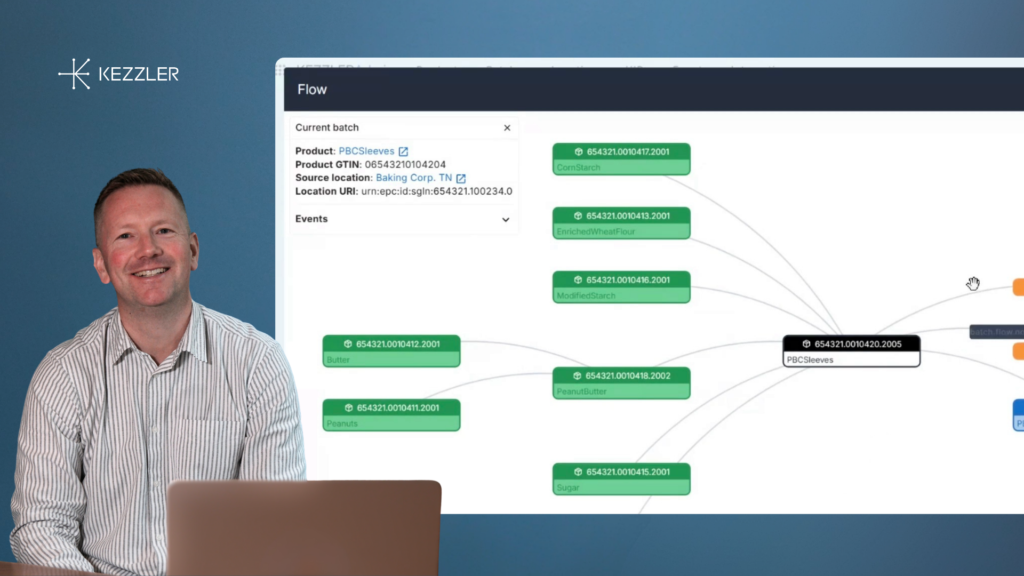
Who creates a product’s identity, who owns it, and how does it scale to billions? In short videos, Kris Ray, Product Owner at Kezzler, walks through the answers from the Dealing with billions solution brief.